



JOS, PLATEAU STATE — Concluding an intensive eight-day multi-state stakeholder engagement series in Jos, the Agro-Climatic Resilience in Semi-Arid Landscapes (ACReSAL) project stakeholders have finalized its implementation-focused reviews of Nigeria’s 20 Strategic Catchment Management Plans (SCMPs), wrapping up its deliberations with the vital Sokoto-Zamfara catchment.
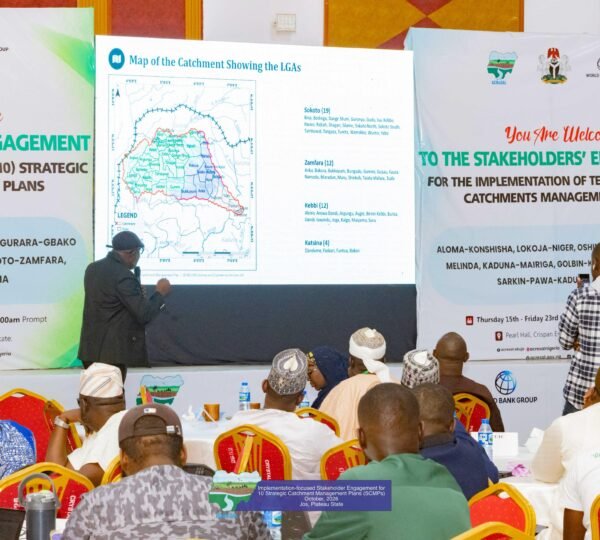 This milestone session mirrors strategic reviews previously conducted for other critical regional basin ssuch as Oshin-Oyi, Kaduna-Mariga, Gurara-Gbako, Rima among other where stakeholders similarly united to diagnose localized environmental vulnerabilities and chart data-driven intervention pathways.
Spanning 4.59 million hectares (45,883 km²) across 47 local government areas in Sokoto, Zamfara, Kebbi, and Katsina states, the Sokoto-Zamfara catchment supports an estimated population of 13 million people, which is projected to surge by 81% to reach 23 million by 2050. Zamfara and Sokoto states alone account for two-thirds of this total demographic weight.
The basin operates under a tropical semi-arid climate where roughly 80% of annual rainfall is concentrated between June and September.
Agricultural land dominates 84.0% of the mapped area, while rapid urbanization has caused built-up land to more than double from 34,677 hectares in 2017 to 68,769 hectares in 2025. Soil profiles reveal that sandy Arenosols cover 37% of the mapped territory, making them highly prone to wind erosion, while Luvisols and Acrisols face fertility depletion and gully erosion.
Furthermore, composite flood vulnerability models indicate that 56.7% of the catchment experiences moderate risk, with 11.4% classified under high vulnerability and 0.5% under very high risk.
Hydrological assessments indicate that total water demand will climb by 65% from 611 million cubic meters per year in 2025 to 1,007 million cubic meters per year by 2050, narrowing the regional surplus from 1,556 million cubic meters down to 1,160 million cubic meters.
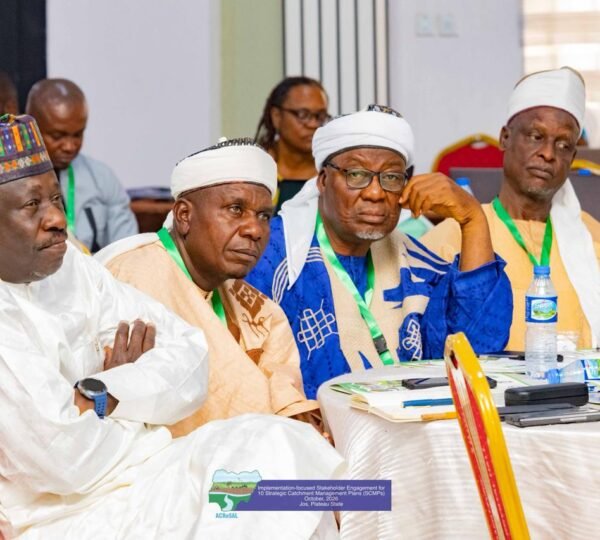 Water quality analyses underscore acute contamination risks, including agricultural chemical runoff, untreated municipal sewage, industrial effluents, aggressive Typha grass invasion, high electrical conductivity, excess fluorides and nitrates, and dangerous levels of heavy metals like mercury and lead introduced by informal gold mining in Zamfara.
Aligning with the broader consensus established across all strategic catchments during the Jos workshops, stakeholders have prioritized targeted interventions to heal the Sokoto-Zamfara basin and restore socio-economic vitality.
By 2030, the master plan aims to achieve a 30% reduction in water wastage, a 20% increase in forest cover, and a 25% boost in sustainable agricultural productivity through major reservoir desilting, gully control, expanded small-scale irrigation, and robust community-led landscape restoration.
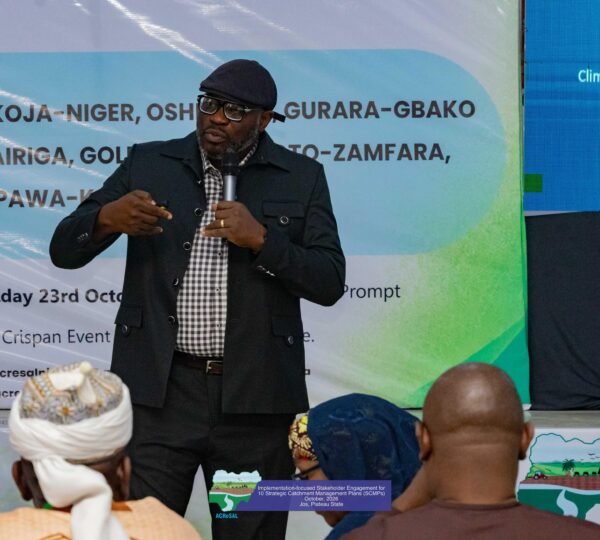 Moving forward, the success of this monumental framework hinges on a decisive shift from scientific documentation to urgent, cross-sectoral execution. State governments, relevant ministries, traditional authorities, local communities, and development partners must now take full institutional ownership by integrating these implementation-focused priority interventions directly into annual operational budgets, strengthening inter-state coordination bodies, enforcing environmental governance laws, and empowering grassroots communities—particularly women and youth—to actively drive landscape restoration, safeguard regional water security, and guarantee lasting climate resilience for millions of citizens.
ACReSAL..greening the environment, saving lives